Ucz się z nami



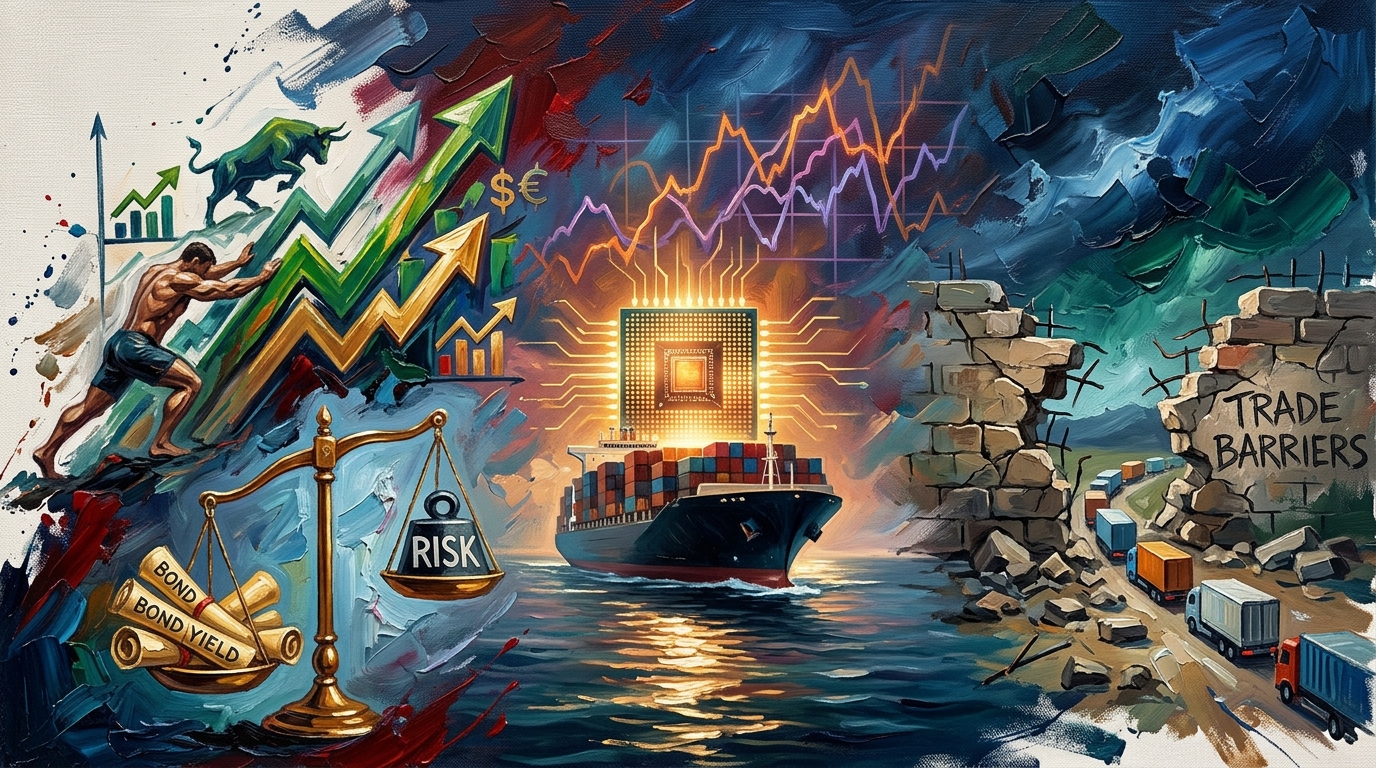
Good morning. Wednesday's session brings a fascinating mix of strong optimism in the tech sector and a continuous reassessment of geopolitical risks. On one hand, capital is returning to risk assets, boosting stock indices in Asia and Europe; on the other, debt markets are sending warning signals with noticeable rises in bond yields. Investors are carefully weighing reports of gradual de-escalation in the Middle East, which directly impacts crude oil valuations and global shipping costs.
Geopolitical Environment
US–Iran tensions remain a key sentiment driver, but the market is beginning to see a light at the end of the tunnel. Independent reports indicate that Iran and Oman are conducting advanced talks regarding mechanisms for ensuring safe navigation and managing the strategic Strait of Hormuz. Although negotiations take place under the shadow of military and political pressure from the United States, and messages from Washington remain mixed, markets interpret this as a step toward stabilization.
Signs of normalization are also visible at sea. Industry data suggests that logistics giant Maersk is gradually restoring select services on the route through the Red Sea and Suez Canal. In response to a shrinking geopolitical risk premium, crude oil prices have begun to pull back after earlier surges. This calming in the commodities market immediately translated into improved sentiment—futures contracts on major Wall Street indices rebounded significantly following recent declines. (Sources: Reuters; Ahram Online; Ship247; E8 Markets)
Today's Highlights
- The grand return of the tech bull run. Sentiment around artificial intelligence (AI) and semiconductor companies has once again heated up global markets. In late July, Asian indices, including Japan's Nikkei 225 and South Korea's KOSPI, posted exceptionally strong gains, rising anywhere from a few to double-digit percentages intraday. Chipmakers like SK Hynix and Samsung led the rally. Meanwhile, the pan-European STOXX 600 index rose on the back of a global tech rebound, and Australia's ASX 200 approached record highs from earlier in the year. (Sources: Reuters; TradingKey; Investing.com; TradingEconomics)
- Gigantic investment banking fees in the shadow of tech. Optimism in the semiconductor sector is translating into concrete capital flows. A massive planned secondary stock offering on the US market by South Korean chipmaker SK Hynix is estimated to generate up to $140 million in fees for Wall Street banks. This would be one of the largest transactions of its kind in history. (Sources: Financial Times)
- Trade protectionism hits record highs. The global economy is becoming increasingly fragmented. The joint Trade Policy Activity Index, developed by the WTO (World Trade Organization) and the IMF (International Monetary Fund), reached its highest level on record in the first months of 2026. Average activity from January to May was nearly double that of 2024. This increase is driven primarily by restrictions such as tariffs and import bans, alongside a weakening of measures facilitating free trade. (Sources: Fibre2Fashion; IMF)
- Rising bond yields signal inflation fears. The cost of money in debt markets is rising once again. In July, Treasury yields in the eurozone and the US were on track for their largest monthly increase since March. A similar trend is evident in Japan, where Japanese Government Bond (JGB) yields are touching multi-year highs. Investors are demanding a higher risk premium, concerned that recent oil market turmoil and Middle East tensions could entrench elevated inflation, forcing central banks to keep interest rates higher for longer. (Sources: Reuters; Economic Times)
- Asia reforms currency and bond markets. Authorities across Asia are stepping up efforts to attract foreign capital. South Korea officially introduced 24-hour trading on the onshore market for the USD/KRW currency pair. Meanwhile, Beijing and Hong Kong announced a broad package of 11 measures to integrate financial markets. Key among them are raising the annual quota for the Southbound Bond Connect program (which allows mainland Chinese investors to buy Hong Kong bonds) from RMB 500 billion to RMB 800 billion, alongside developing new settlement infrastructure for gold. (Sources: BIS; Economic Times)
Market Background
- Expectations ahead of Palantir earnings. Investors are eagerly awaiting Palantir's official Q2 financial results. Analyst consensus projects revenues around $1.81 billion, which would mark a massive increase of approximately 80% year-over-year. It is worth recalling that after Q1, management raised its full-year guidance to $7.65–$7.66 billion. (Sources: Zacks; AllMind; Palantir)
- Venezuela faces historic debt challenge. The country is preparing for one of the most complex debt restructurings in modern history. Total creditor claims are estimated at around $200–$240 billion. The process is further complicated by severe economic damage caused by recent catastrophic earthquakes. (Sources: Il Sole 24 Ore; Bloomberg)
- Temporary glitch at the heart of European finance. The Target2 payment system, used by the European Central Bank (ECB) to settle large euro transactions, experienced a brief technical outage in recent days. The ECB has already announced that the issue was swiftly resolved and the system has returned to fully operational status. (Sources: Economic Times)
- Local fallout from global shocks. Geopolitics is hitting emerging markets and the agricultural sector. International institutions have lowered Kenya's economic growth forecasts for 2026–2027 to around 4.5%, citing global tensions and high energy costs, among other factors. In France, the government plans to launch an emergency support package for farmers to purchase fertilizers, aiming to cushion the blow of rising input costs and extreme weather. (Sources: African Development Bank; Reuters; Moneycontrol)
- Positive outlook for Tullow Oil. The exploration and production company announced an increase in its Free Cash Flow guidance for 2026, anchoring this optimism in very strong operational performance across its assets in Ghana. (Sources: MarketBeat)
- Unconfirmed moves by the Chinese central bank. Media reports have emerged regarding a massive liquidity operation by the People's Bank of China (PBOC) in the overnight repo market (allegedly amounting to CNY 600 billion). However, these reports have not yet received official confirmation from the bank. (Sources: PricePredictions)
Key Events to Watch
The coming days will be dominated by key macroeconomic releases, with a particular focus on the US labor market, which could determine the Fed's autumn moves amid inflation concerns.
- 08/05 (Today) – US: ADP Employment Change (14:15). A preliminary gauge of private-sector labor market health, traditionally setting expectations ahead of Friday's official government report.
- 08/05 (Today) – US: ISM Services Index (16:00). A key reading for the US economy, which is heavily service-driven. Investors will scrutinize sub-indices for prices paid (inflationary pressure) and employment.
- 08/06 (Thursday) – Eurozone: Retail Sales (11:00). A reading reflecting European consumer sentiment and purchasing power.
- 08/06 (Thursday) – US: Initial Jobless Claims (14:30). A weekly, high-frequency indicator showing current layoff dynamics.
- 08/07 (Friday) – US: NFP Labor Market Report (14:30). The absolute highlight of the week. Non-farm payrolls, the unemployment rate, and wage growth will drive dollar pricing and US Treasury yields for weeks to come.
- 08/09 (Sunday) – China: CPI and PPI Inflation (03:30). Crucial data showing whether deflationary risks still dominate the Chinese economy or if signs of demand recovery are emerging.