Ucz się z nami



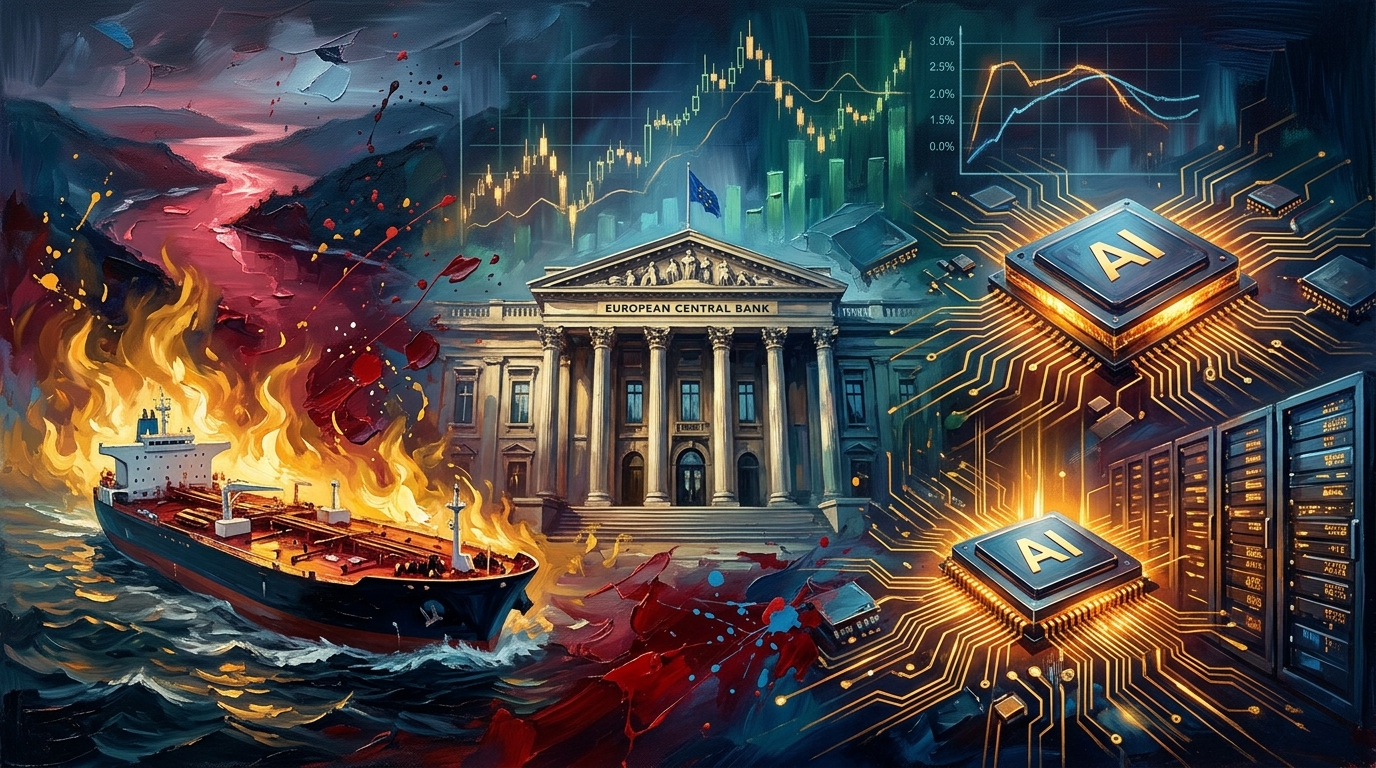
Today's session is dominated by analyzing the aftermath of yesterday's highly dynamic events. Markets are digesting the European Central Bank's (ECB) decision to pause its rate-hiking cycle, as well as ongoing geopolitical tensions that are keeping energy commodity prices high. Meanwhile, in the technology sector, following a wave of sell-offs, investors are recalculating the massive costs of artificial intelligence (AI) deployment, triggering significant portfolio reshuffling.
Geopolitical Environment
Persistent tensions in the Middle East, particularly risks to shipping security in the Red Sea and the Bab al-Mandab Strait, continue to unsettle markets. Concerns over supply chain disruptions have recently pushed Brent crude oil prices back near the psychological barrier of $100 per barrel. For financial markets, this primarily means a resurgence of fears regarding a return of inflationary pressure.
Today's Highlights
-
ECB opts for a pause, but keeps an eye on energy prices. As expected, at its July 23 meeting, the European Central Bank kept key interest rates unchanged, leaving the deposit facility rate at 2.25%. In its official statement, the ECB emphasized that it is closely monitoring the inflation outlook and the impact of energy price changes on the euro area economy, a direct reference to oil market turbulence. President Christine Lagarde noted that the bank is not pre-committing to any specific rate path. Investors are interpreting this message cautiously—market pricing still signals a high, albeit volatile, probability of another 25 basis point rate hike at the September meeting. (Sources: European Central Bank; Central Banking; CaixaBank Research).
-
AMD's multi-billion-dollar investments in AI development. Midst ongoing debates over the cost of the AI revolution, AMD announced a major strategic partnership with Anthropic. The deal involves deploying up to 2 gigawatts of compute power based on AMD Instinct MI450 GPU accelerators. According to press reports, AMD plans to invest up to $5 billion in capital into this collaboration. Industry sources indicate that the first mass deployments are set to begin in 2027, with the total value of the contract estimated at several billion dollars. This is a clear signal that the AI infrastructure arms race is not slowing down, despite market concerns about costs. (Sources: AMD; Silicon Republic; Reuters; The Hindu).
-
US Treasury yields rise in the shadow of inflation. Significant reshuffling is underway in the bond market. US Treasury yields rose sharply across the entire yield curve, reaching their highest levels in several months. This is a direct response to higher energy commodity prices and associated inflation fears. Consequently, futures markets signal that expectations for swift rate cuts by the US Federal Reserve (Fed) in the coming quarters have significantly diminished, while the probability of a potential rate hike at the upcoming meeting has noticeably increased. (Sources: Bloomberg; Reuters; USA Today).
Market Background
- AI infrastructure costs weigh on tech giants. As a reminder, major US and Asian stock indexes suffered sharp declines in recent days, with the tech sector underperforming the most. This follows earnings reports from companies like Alphabet and Tesla, which revealed that massive, rising capital expenditures (capex) on manufacturing infrastructure and AI are beginning to put pressure on free cash flows and margins. Markets are coming to realize that AI monetization is a marathon, not a sprint. (Sources: Reuters; AP News; TheStreet).
- Mixed results from Neste OYJ and a painful stock market reaction. Finnish refining group Neste reported that its Q2 comparable operating profit (core profit) rose to approximately EUR 1.20 billion. Although the result was supported by very high, beat-expectation margins in the renewables segment, weakness in the traditional fossil fuel segment weighed on the overall performance. Profit fell slightly short of the market consensus (around EUR 1.23 billion), which was enough to send the company's shares down by roughly 8% on the Helsinki exchange. (Sources: Reuters; Euronext; Global Banking & Finance Review).
Key Events to Watch
- July 24 – Eurozone, Germany, UK, and US: Flash PMI indicators. Today will be dominated by Purchasing Managers' Index (PMI) readings for manufacturing and services. These preliminary ("flash") estimates provide an early look at economic health and cost pressures in the world's major economies ahead of upcoming central bank meetings.
- July 24 – Japan: Consumer Price Index (CPI). The morning inflation release in Japan is crucial for market expectations ahead of the Bank of Japan's (BOJ) upcoming interest rate decision, especially against the backdrop of a historically weak yen.
- July 27 – Germany: Ifo Business Climate Index. Following the weekend, we will see the release of this key indicator of German business climate and sentiment, which influences growth outlook assessments across the entire euro area.
- July 27 – US: Durable Goods Orders. Monday's US economic data will help gauge the pace of business investment and consumer demand for big-ticket items, which could impact the dollar's valuation.