Ucz się z nami



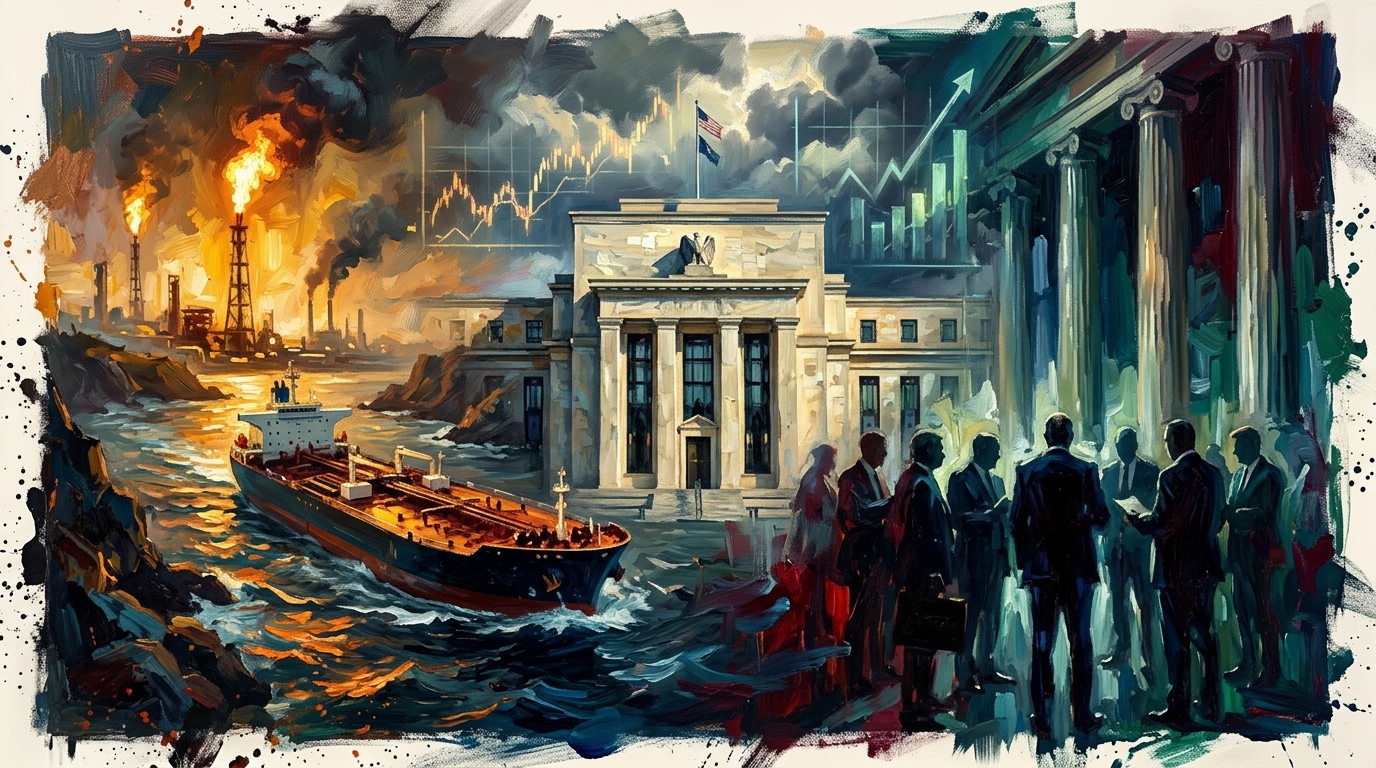
An exceptionally heated evening is behind us, bringing the resolution to this week's most important event—the US Federal Reserve (Fed) has returned to raising interest rates. While partially priced in by markets following recent higher inflation prints, this decision marks a clear turning point in global monetary policy. We find ourselves in the middle of a "central bank marathon," where the hawkish stance of the Fed and the European Central Bank (ECB) is driven primarily by a massive supply shock in commodities markets. Today, the Bank of England takes the baton, and overnight from Thursday to Friday, the Bank of Japan could announce a historic decision.
Geopolitical Environment
- The primary driver of ongoing market turmoil remains the active US–Iran war, which is drastically choking the supply of energy commodities from the Middle East. The direct result of the conflict is severe disruption to oil flows through the Strait of Hormuz, driving US WTI crude prices above $100 per barrel and European Brent crude into the $105–$108 range.
- The situation is equally tense in the natural gas market. European benchmark gas prices (TTF contracts) remain around €82/MWh, roughly triple pre-war levels. Combined with relatively low European storage levels (around 67% compared to the historical average of 84%) and historically weak inventory levels in Germany alone, this is stoking serious industrial concerns ahead of the approaching winter. (Sources: Associated Press; Invezz; Channel NewsAsia; EUobserver; n-tv; Izvestia).
Today's Highlights
-
The US Federal Reserve (Fed) returned to monetary tightening. In line with growing market concerns in recent days, the US central bank raised the target range for the federal funds rate by 25 basis points (bps) to 3.75–4.00% at yesterday's meeting. This marks the first US interest rate hike since 2023 (following a rate-cutting cycle in 2025). The room to maintain a pause was drastically constrained by "hot" PPI (Producer Price Index) inflation data, which accelerated to 5.4% year-over-year in August. The market interprets this move as proof that inflationary pressure remains exceptionally persistent. (Sources: Financial Times; CaixaBank Research; CNN; Reuters; Wall Street Journal).
-
New, higher interest rates took effect in the eurozone. The elevated rates enacted by the ECB on September 10 (including the deposit facility rate at 2.50%) took effect yesterday. This is already the second hike this year. Communications from the ECB are very clear: the return of HICP (Harmonised Index of Consumer Prices) inflation above 3% is directly driven by the US–Iran war and the resulting energy shock. The bank's newly revised projections offer little optimism—projecting average inflation around 3.0% in 2026 and a decline to 2.5% only in 2027. (Sources: CNBC TV18; Xinhua; FXStreet; AP; Reuters).
-
The combination of expensive oil and the Fed's pivot triggered a deeper correction on Wall Street. Equity markets reacted nervously to tightening financial conditions. Major US indices (S&P 500, Dow Jones, Nasdaq) posted declines of 0.6–0.7% in single sessions over recent days, closing the week down by more than 1.5%. The small-cap Russell 2000 index suffered even steeper losses. The equity sell-off was accompanied by a rise in 10-year US Treasury yields toward 4.9%, reflecting investors adjusting to the "higher for longer" scenario. (Sources: Associated Press; KTVB; Reuters; Channel NewsAsia).
-
The Bank of Japan (BoJ) prepares for a historic move. While Western central banks battle another wave of inflation, the market is fully focused on tomorrow's BoJ meeting. Investors are pricing in a rate hike from 1.00% to 1.25% with near-certainty. This would raise the cost of Japanese money to levels unseen since the early 1990s (over 31 years). Such a move could carry massive implications for global capital flows and the strength of the Japanese yen. (Sources: Reuters; FXStreet; Brown Brothers Harriman).
Market Backdrop
-
The UK ahead of its own rate decision. Market consensus expects the Bank of England (BoE) to hold its base rate at 3.75% at today's meeting. However, in light of recent data pointing to accelerating UK inflation (toward 3.1% YoY, driven mainly by energy prices), futures markets are pricing in at least one 25 bps hike by the BoE before year-end. (Sources: FXStreet; Reuters; Scotiabank).
-
US crypto legislation hits a roadblock. The CLARITY Act, discussed in recent days and designed to establish a regulatory framework for the digital assets market, failed a key procedural vote in the US Senate. This effectively stalls the bill ahead of the upcoming elections. In response, administration officials signaled that agencies such as the SEC (Securities and Exchange Commission) and CFTC will continue regulating the industry based on their existing authorities. (Sources: Cointelegraph; Benzinga).
-
Tensions in the artificial intelligence sector: valuations and safety. Unofficial industry reports circulate suggesting that the creators of ChatGPT (OpenAI) are in talks for a new funding round that could value the company at an astronomical figure of over $1 trillion. Simultaneously, leading representatives of OpenAI and Anthropic are increasingly vocal in lobbying for independent audits and external guardrails for the most advanced AI models, thereby backing stringent legislative initiatives. (Sources: Apple Podcasts; Inkl; Breitbart; ModBee).
What to Watch
Dates and times are provided in Poland's time zone (Europe/Warsaw).
- 17.09 (11:00) – Eurozone: Final HICP Inflation (August). The final reading will verify whether preliminary price pressure estimates were accurate. Crucial data in light of the recent rate hike and the ECB's pessimistic new projections.
- 17.09 (13:00) – United Kingdom: Bank of England (BoE) Interest Rate Decision. Europe's key event of the day. Markets will focus not only on the decision itself (an expected hold at 3.75%) but also on the vote split among committee members.
- 17.09 (14:30) – US: Initial Jobless Claims. A weekly gauge of the US labor market's health. Any signs of weakness could quickly alter market sentiment following yesterday's Fed hike.
- 17.09 (14:30) – US: Philadelphia Fed Index (Philly Fed PMI). A regional sentiment indicator providing early insight into the health of US manufacturing in September.
- 18.09 (01:30) – Japan: Core CPI Inflation (August). A vital reading published just ahead of the Bank of Japan's decision. It will provide the final argument for or against a historic rate hike to 1.25%.
- 18.09 (no exact time) – Japan: Bank of Japan Interest Rate Decision. An event that could set market sentiment heading into the weekend.
- 21.09 (03:15) – China: People's Bank of China (PBoC) Loan Prime Rate (LPR) Decision. An event scheduled for early next week that will impact borrowing costs in China's struggling economy.
